


MCRI Research Archive
Below are the research projects (in PDF form where available) that the Aquarium of the Pacific has been involved in since the inception of MCRI.

Species Composition and Abundances of Nearshore Reef Fish
As the majority of the twenty-seven petroleum platforms off of California are slated to end productivity within the next ten years, the issue of decommissioning is becoming of greater public interest. Previous surveys in the Santa Barbara Channel have shown that petroleum platforms act as rearing habitat for many over-fished rockfish species, however no thorough systematic surveys of the platforms located off Long Beach and Huntington Beach have been conducted.
California Coast Keeper Alliance (2006 - present)
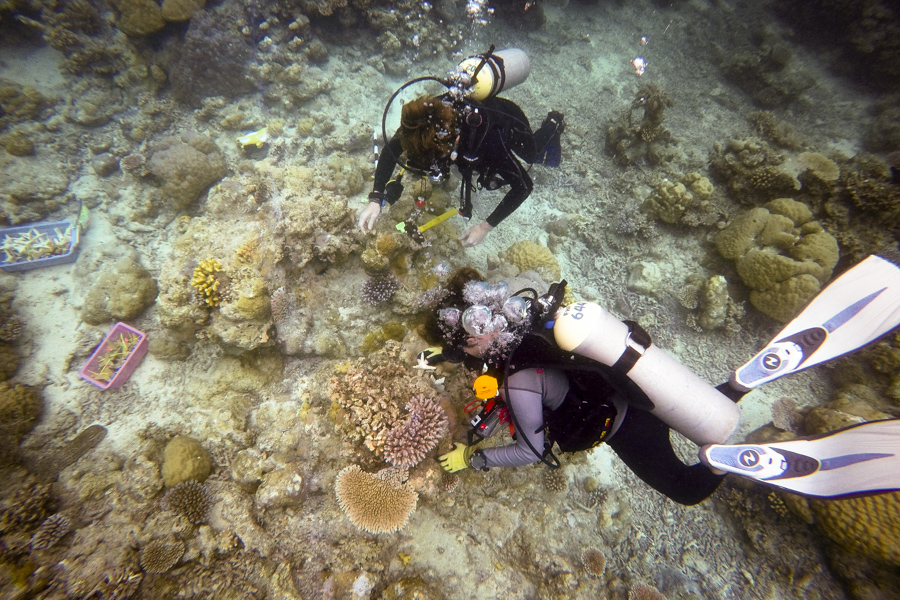
Trained AAUS volunteer scientific divers from the Aquarium of the Pacific are assisting the California Coast Keeper Alliance with a two-year monitoring project at Crystal Cove State Park.
USC Sediment Circulation Study (2006)
Trained AAUS volunteer scientific divers from the Aquarium of the Pacific assisted researchers from USC and the University of Washington studying seawater circulation through nearshore sediments by obtaining core sediment and water samples from the substrate from three sites off of the coast of Huntington Beach.
Maritime Archaeology/National Parks (2005)
In November 2005, the Aquarium Dive Safety Officer participated in the annual NPS/CMAR shipwreck survey in California’s Northern Channel Islands.
Channel Islands Monitoring (2005)
The overall goal of this community-based research program is to train volunteer non-scientists to conduct research and collect data relating toquestions of marine conservation and management inside the recently established Marine Protected Areas (MPAs) of the CINMS. Data was collected during a one week research expedition to the Channel Islands, where the divers practiced data collection following specific sampling protocols. Information obtained was used to supplement existing monitoring projects already underway by researchers at UCSB, PISCO, CDFG, the CINMS, and the Channel Islands National Park Service’s Kelp Forest Monitoring Program (KFM), among others.
Tracking the Brown Sea Hare (Aplysia californica) in the Southern California Bight (2005)
Volunteer scientific divers from the Aquarium of the Pacific assisted California State University, Fullerton PhD. candidate Mike Navarro with his studies aimed at understanding how larvae of many species disperse in ocean currents.
Cal State Fullerton – Larval Mollusc Movement Study (2005)
Scientific divers from the Aquarium of the Pacific assisted graduate students from California State University, Fullerton by collecting larval sea hares and various other mollusks. Deciphering the connectivity of marine populations involves tracking larval sources and settlement sites.
National Park Service Kelp Monitoring Survey (2004)
Several Aquarium scientific divers participated in kelp monitoring survey cruises held by the National Park Service at the Channel Island Marine Sanctuary. Their contributions were especially valuable since kelp forest monitoring has been severely impacted due to limited funding by these agencies.
Abalone Surveys with California Department of Fish and Game (2004 - present)
In the spring of 2004 the Aquarium of the Pacific began a cooperative effort with the California Department of Fish and Game aimed at determining baseline data on existing populations of abalone at Santa Catalina Island. Scientific divers have conducted numerous monitoring trips at several locations around Catalina and the Palos Verdes peninsula.