


Golden Mantella Frog
Mantella aurantiaca
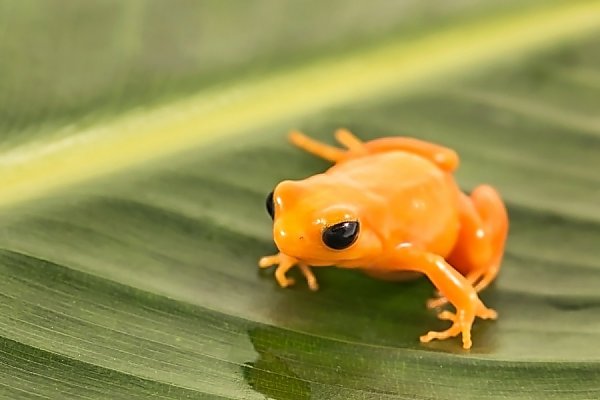
Golden mantella frogs get their name from their bright yellow or orange color. This endangered frog is found in humid forests of east central Madagascar. Their bright coloration advertises to predators that they are toxic. They breed and lay eggs on land. Rain washes the hatching tadpoles into pools or streams. This frog faces further fragmentation or loss of habitat, plus pressure from the pet trade.
Originally published: April 16, 2018
Last updated: January 22, 2026
Credit: Robin Riggs
SPECIES IN DETAIL
Golden Mantella Frog
Mantella aurantiaca
CONSERVATION STATUS: Endangered
Geographic Distribution
This species is found only in isolated areas of east central Madagascar.
Habitat
This frog is a terrestrial species typically found in sun-exposed sites among vegetation in damp swampy areas.
Physical Characteristics
This frog comes in shades of orange, bright yellow and red with black eyes. Their legs are short with sticky discs on the ends of their fingers and toes. They are sexually dimorphic with females being larger than males and with a less angular body shape.
Size
These frogs are typically 1.25 inches (3.18 cm) in length.
Diet
These frogs feed on insects, typically ants, fruit flies, termites, and any insect that fits into its mouth. At the Aquarium they eat tropical springtails, wax worms, and newly hatched pinhead crickets.
Reproduction
Golden mantella frogs breed after the first heavy rains of the year, with males calling to attract females. Eggs are laid on land in damp places or under rocks near where water is present. After the eggs are fertilized, they hatch in about two weeks as tadpoles and rain will wash them into nearby pools. In about two months, they become froglets and they become fully mature about a year after.
Behavior
Golden mantella frogs typically remain inactive during the winter months of May to October. In summer they are active during the day. They live in groups with typically twice as many males as females. These frogs use sounds to communicate and vision to locate prey.
Adaptation
Their bright coloration serves as a warning to predators that it is toxic and not to eat it.
Longevity
This species typically lives eight years in the wild.
Conservation
The golden mantella frog is listed as endangered by the IUCN. They are threatened by forest fragmentation, habitat loss due to logging, and urbanization. While their habitat is protected and exportation is limited under CITES legislation, they still face pressure due to illegal pet trade and lack of enforcement. These frogs have been successfully bred under human care which has the potential to aid in future conservation efforts.
SPECIES IN DETAIL | Print full entry
Golden Mantella Frog
Mantella aurantiaca
CONSERVATION STATUS: Endangered
This species is found only in isolated areas of east central Madagascar.
This frog is a terrestrial species typically found in sun-exposed sites among vegetation in damp swampy areas.
This frog comes in shades of orange, bright yellow and red with black eyes. Their legs are short with sticky discs on the ends of their fingers and toes. They are sexually dimorphic with females being larger than males and with a less angular body shape.
These frogs are typically 1.25 inches (3.18 cm) in length.
These frogs feed on insects, typically ants, fruit flies, termites, and any insect that fits into its mouth. At the Aquarium they eat tropical springtails, wax worms, and newly hatched pinhead crickets.
Golden mantella frogs breed after the first heavy rains of the year, with males calling to attract females. Eggs are laid on land in damp places or under rocks near where water is present. After the eggs are fertilized, they hatch in about two weeks as tadpoles and rain will wash them into nearby pools. In about two months, they become froglets and they become fully mature about a year after.
Golden mantella frogs typically remain inactive during the winter months of May to October. In summer they are active during the day. They live in groups with typically twice as many males as females. These frogs use sounds to communicate and vision to locate prey.
Their bright coloration serves as a warning to predators that it is toxic and not to eat it.
This species typically lives eight years in the wild.
The golden mantella frog is listed as endangered by the IUCN. They are threatened by forest fragmentation, habitat loss due to logging, and urbanization. While their habitat is protected and exportation is limited under CITES legislation, they still face pressure due to illegal pet trade and lack of enforcement. These frogs have been successfully bred under human care which has the potential to aid in future conservation efforts.