Aquarium of the Pacific Successfully Spawns Pink Sea Stars
Aquarium staff and partners take a step forward in the research of the preservation of the genetic material of pink sea stars.
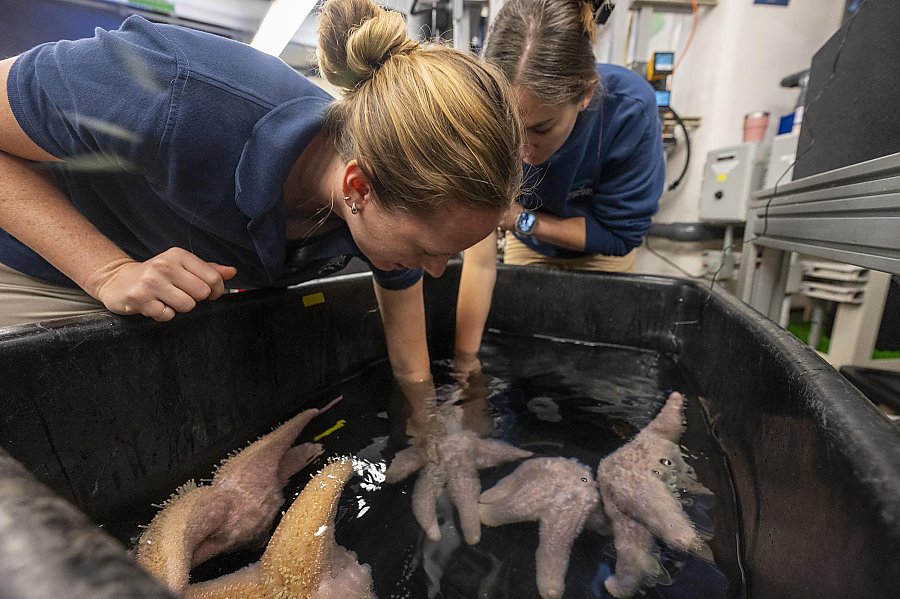
From left to right, Aquarium of the Pacific Conservation Manager Johanna Hultberg and Aquarist Melissa Fisher prepare for a day of spawning pink sea stars. Credit: Aquarium of the Pacific
June 23, 2026
This spring, Aquarium of the Pacific staff and partners successfully spawned pink stars while advancing research on the preservation of their genetic material. Building on a successful trial conducted in June 2025, the team refined methods for cryopreserving pink star larvae, an important milestone in safeguarding the species’ genetic diversity and a development that offers hope for future applications to support endangered sunflower sea star conservation efforts. As of now, this is only way to preserve the genetics of female pink sea stars.
Researchers found that pink star larvae can be successfully cryopreserved using cryopreserved sperm. With larval cryopreservation being the only available method for preserving the genetic contribution of female pink stars, this makes this breakthrough particularly significant.
The ability to preserve genetic material provides flexibility for conservation breeding programs and reduces the need to synchronize spawning events between male and female pink sea stars. It also ensures that genetic material collected during spontaneous spawning events can be preserved rather than lost, creating new opportunities to maintain valuable genetic diversity. Pink sea stars and sunflower sea stars share much of the same range throughout the Northern Pacific, historically found from Alaska to Baja California. Both species have been impacted by sea star wasting disease (SSWD), making their contemporary range from Alaska to Northern California. Recent research has identified a bacterial species as a primary cause of the disease. These findings will help inform future conservation and recovery efforts for affected sea star populations.
With repeated success spawning the pink sea stars and cryopreserving genetic material, the Aquarium, partners, and other researchers are better positioned to take the next steps toward supporting sunflower sea star recovery efforts.
The Aquarium of the Pacific is actively involved in ongoing conservation efforts aimed at rebuilding sunflower sea stars populations in California. The Aquarium of the Pacific is a founding partner of the Association of Zoos and Aquariums (AZA) SAFE Sunflower Sea Star program. The Aquarium is also a founding member of the Pacific Coast Ocean Restoration Initiative (PCOR), a comprehensive, collaborative statewide effort focused on restoring and recovering critical rocky reef and kelp forest ecosystems and their inhabitants across California. Conservation work, like this project, is fueled by philanthropy. To learn more and support, please visit this donation page.