Aquarium of the Pacific - A Non-profit Organization
Today's Hours: 9:00 am – 6:00 pm

Aquarium CEO Dr. Peter Kareiva Speaks About The Benefits Of Nature And Science During Legislative Hearing

The Aquarium’s president provided expert testimony in front of the U.S. House of Representatives Committee on Natural Resources’ Subcommittee on Water, Wildlife, and Fisheries
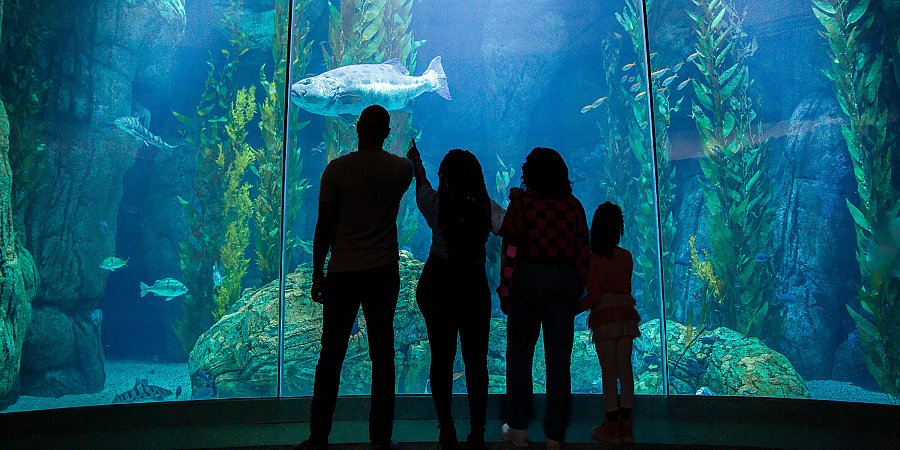
Family in front of Blue Cavern exhibit pointing at Sea Bass

Credit: Aquarium of the Pacific/Brian Gray

March 26, 2025

We all have a connection to nature, and benefit from it in diverse ways. Nature provides our nation with food, jobs, and numerous sources of revenue as well as supports our wellbeing and health. Aquarium of the Pacific President & CEO Dr. Peter Kareiva spoke about the benefits of nature and how science can balance the competing needs on our natural resources during a legislative hearing of the Subcommittee on Water, Wildlife, and Fisheries, House Natural Resources Committee on March 25 in Washington, D.C. “Nature is for you, me, all of us. We may see its value in different ways, but we all need a healthy natural world, and science can help all of us achieve that goal,” says Dr. Kareiva, Aquarium of the Pacific president and CEO.

Dr. Kareiva discussed recent research on the health benefits of nature, including improving cognitive function, speeding the healing process, and reducing blood pressure and pain. He highlighted our renowned parks that bring tourism from around the world. He also outlined examples of how healthy predator populations and ecosystems support human health, our food supply, and industry.

Nature is valuable, and that value can lead to competition for its uses and benefits, but this is where research can be the answer, Dr. Kareiva stresses.

“With science, we can find solutions that benefit both business and nature. We can invest in science so we can pursue growth and development by design, without bankrupting our economy and losing the natural assets that set America apart from the rest of the world,” says Dr. Kareiva. During the hearing, he talked about the importance of kelp forests, the gray wolf, and environmental legislation. He noted that science changes from year to year. Dr. Kareiva emphasizes, “The key to science helping us achieve a win for conservation and a win for livelihoods is that science be up-to-date and be intentional in its service to both nature and people.”

The nonprofit Aquarium of the Pacific’s mission is to instill a sense of wonder, respect, and stewardship for the Pacific Ocean, its inhabitants, and ecosystems. The Aquarium’s vision is to foster an inclusive community that works together to create our sustainable future. More than 100 exhibits and 12,000 animals connect its 1.6 million annual visitors to nature, and dozens of the Aquarium’s conservation programs are saving species, from frogs and sea turtles to sea otters and kelp. The Aquarium of the Pacific is a member of the Association of Zoos and Aquariums (AZA), which collectively serves more than 147 million people per year in the U.S. alone. To make a donation to help support the Aquarium, please visit pacific.to/donate.
The official submitted written testimony:

Dr. Peter Kareiva, CEO and President of the Aquarium of Pacific March 25, 2025, legislative hearing of Subcommittee on Water, Wildlife and Fisheries.

Good morning, Chair Hageman and members of the subcommittee. My name is Peter Kareiva, and I am the CEO and President of the Aquarium of the Pacific. Our Aquarium attracts 1.6M visitors every year. We are proud members of the Association of Zoos and Aquariums. I want to begin by pointing out that zoos and aquaria in America are visited each year by over 147 million people for whom it can be a life-changing experience, rich or poor, urban or rural, and from all colors and points of view. Those 147 million visits surpass the total annual attendance to all major professional sports in America combined.

I suspect that everyone in this room has visited a zoo or aquarium at some point. It may bring back childhood memories for you. You may also have witnessed the joy and excitement of your own children or grandchildren when visiting a zoo or aquarium. That joy knows no bounds and is something we are all born with – after all we are each connected to a vast web of life from the salmon on your dinner plate, to the frogs in your pond, to the coyotes roaming the hills where you live, to your family cat or dog. That connection is visceral and far more real than a connection to a smart phone. There is evidence our cognitive abilities are enhanced, while stress levels, anxiety and blood pressure decline when we watch animals or get out in nature. We and our children need nature for our health and well-being AND the reality is we also need nature for our economy. And I am here to say we don’t need to choose between one or the other.

Some of you represent states that attract millions of tourists because of your state’s natural beauty and majestic wildlife. Our parks and wildlands are the envy of the world. Tourists come from all over the world to experience our great outdoors. Meanwhile, waitlists to get campsites at our public lands have never been longer. Nature drives revenue.

In other cases, nature’s benefits emerge through a chain of interactions: streams with clean water provide fish to eat, water to drink and water to support our farms. This water sustains us best when it runs through landscapes with healthy predators that prevent overgrazing of stream banks, preventing averting erosion. Clean water is there for us only when we effectively manage the wildlife and the landscapes through which our waterways run.

Natural bounty sustains, defines, and connects us as a nation. It is why we must steward what may be our greatest asset – our natural resources, whether it is saving icons like the bald eagle or ensuring we can feed our families with the salmon that spawn in our rivers.
Nature is clearly valuable, and that value can lead to competition for its diverse uses and benefits. A fly fisherman may care most about cool, clean steam water; a rancher wants a herd free of disease and healthy rangelands that have not been invaded by inedible weeds from distant continents; a mining operator seeks access to valuable minerals; and the entrepreneur may want undisturbed ocean waters to sustain their new marine aquaculture business. These values and uses of nature sometimes come into conflict.

This is where research can provide answers. Research can find that by engineering bypasses for salmon around a dam and controlling flow rates we can have both salmon and water for irrigation. Research can identify areas well suited for the booming business of ocean aquaculture as well as other locations as refugia for important fish species. Research can identify what is making our chickens sick and search for ways to protect them (and our egg supply) from bird flu. With science, we can find solutions that benefit both business and nature. We have gotten so used to fighting a battle between livelihoods and conservation, that we wrongly assume there is no other way. But there is another way. We can invest in science so we can pursue growth and development by design, without bankrupting our economy and without losing the natural assets that set America apart from the rest of the world.

Nature is for you, me, all of us. We may all see its value in different ways. But can you imagine America without its green rolling hills, quiet streams, towering forests, iconic coastlines, and the sound of birds at dawn? Americans need nature for far more than just recreation.

We need a healthy natural world, and science can help all of us achieve that goal. It is important to acknowledge recent research on the health, cognitive and psychological benefits to connecting with animals, and experiencing nature and the great outdoors. Nature’s healing powers have been recognized for centuries. But only recently has solid scientific data confirmed an age-old intuition – all manner of encounters with wildlife, our household cats and dogs, animals in an aquarium, walks along urban rivers, or hikes in remote wilderness can soothe the stress of modern life. Nature and wildlife experience can be viewed as the ultimate organic “medicine” for well-being. Even something as simple as a view of nature outside a hospital window can shorten a hospital stay following surgery and reduce the need for painkillers. Measures of stress hormones and skin conductance reveal that within as little as fifteen minutes, nature viewing and experience markedly reduces stress. We can measure quantify these effects by measuring cortisol levels, taking blood pressure or administering cognitive tests. The effect spans all cultures and ethnicities in which measurements have been made. Outdoor nature experiences have been used effectively to treat PTSD in veterans. Because technology and digital screens dominate our daily lives, it is too easy to forget about the healing, spiritual, and psychological benefits of nature experience.

The benefits of species, and the value of protecting species to preserve those benefits requires science and a great deal of monitoring. If the concern is the loss of a species such as salmon that could serve recreational and commercial fishers, the benefit of ensuring the salmon does not go extinct is obvious. In many cases, the benefits arise more indirectly than consumption –they arise because of webs of interactions among species in a landscape. For example, researchers have discovered that top predators can play a disproportionate role in ecosystems – so much so they are called “keystone species.” For those species, it is their role in the ecosystem that we must attend to and not just their numbers. By eliminating top predators such as mountain lions and wolves from Eastern North America, we triggered an explosion of deer and deer tick populations that has resulted in more than 20,000 new cases of Lyme disease annually. Efforts aimed at eradicating predators a century ago have jeopardized human health today.

The key to science helping us achieve a win for conservation and a win for livelihoods is for that science to be up-to-date and to be intentional in its service to nature and people. Recent efforts by NOAA to designate areas of America’s West Coast waters as aquaculture development zones are a superb example of science for development and conservation. Research has shown that the potential of the ocean for producing protein via marine aquaculture is enormous. Marine aquaculture can be an economic and conservation win-win. By farming in the ocean, we create jobs and reduce the need to use more and more land to feed everyone. But that aquaculture needs to be sited somewhere. To accelerate development and reduce permitting obstacles, NOAA’s research identified Aquaculture Opportunity Areas, including one off the coast of Southern California. The combination of Aquaculture Opportunity Areas with Marine Protected Areas off the California coast testifies to the possibility of serving both development and conservation.

Strong conservation laws in combination with monitoring and a willingness to alter management when new discoveries emerge are key to securing economic growth and species protection. For instance, twenty years of counting gray whales as they migrated along the America’s West Coast provided sufficient data to remove the species from listing under the U.S. Endangered Species Act (ESA). And now that these whales are recovered, the whale watching industry of California generates $20M in revenue each year. Of course, in other situations the data may indicate that it is not yet time to call recovery complete and to continue investing in conservation actions. Science does not stand still. My experience in conservation has taught me that some conservation/livelihood tensions stem from unsettled science or science that is in a state of flux such that each interested party might argue “science clearly shows” when there is still new information to be processed. The combination of new technologies such as remote sensing, drones, and the ability to collect DNA samples from of wildlife from their environment has revolutionized conservation science in the last twenty years. Many recovery plans for threatened and endangered species were written more than twenty years ago and as a result some of their assumptions and recommendations could be outdated. In these situations, it is not the Endangered Species Act that is flawed. Rather, it is the case that the implementation of the Endangered Species Act through recovery plans needs to be dynamically updated so that the latest science and data are used.

America’s $639 billion outdoor recreation economy—hunting, fishing, and tourism—clearly depends on healthy land and wildlife. Undermining conservation threatens the industries that fuel rural livelihoods and small businesses across the country. The economic value of nature extends far beyond the outdoor recreation industry. We know that mangroves and seagrasses along our coasts reduce wave energy, providing protection against storm damage and an eroding coastline. Modern molecular biology continues to discover unique genes in wild species that promise medical or economic applications. Extreme weather events and wildfires create swaths of destruction, whose recovery depends on both rebuilding human structures but also recovering natural vegetation and animals. It is America’s great variety of species that provides resilience in the face of an increasingly erratic and eruptive weather system.

The U.S. Endangered Species Act passed with overwhelming bipartisan support and was signed by President Nixon. It’s one of the most effective pieces of legislation in American history. Countries around the world have copied it. Supporting it means defending a successful, conservative legacy of American leadership. There is no denying the act has yielded numerous court cases that wrestle with species versus development activities. In most of those cases, the problem is not the law itself – the problem is disputes about what the science tells us. Resolving scientific uncertainty can resolve conflict over management actions.

The success of the Endangered Species Act is impressive. Over 100 species have been either downlisted from endangered to threatened (54) or entirely delisted (56). If it were not for the Endangered Species Act, we would have lost some of our nation’s most iconic species: the American bald eagle, the American alligator, and the American bison to name a few. Species can be saved. And with science the way we go about saving species can also accommodate livelihoods and economic growth. When Lewis and Clark made their historic expedition from Illinois to Oregon in the early 1800s, they described 122 species they encountered along the journey. The fact that all 122 species are still with us is testimony to the effectiveness of the Endangered Species Act and our nation’s commitment to protecting its wildlands and wildlife legacy. No other country in the world has done such a good job of undergoing dramatic growth while also preserving its natural legacy. America has shown the world that it is possible to have both, rather than either/or. The American public expects a strong economy with plentiful jobs. We also value the natural beauty of our landscapes and wildlife and want to pass this natural legacy down to our grandchildren and their grandchildren. With strong conservation laws combined with the world’s most advanced science, America can deliver solutions that provide both.