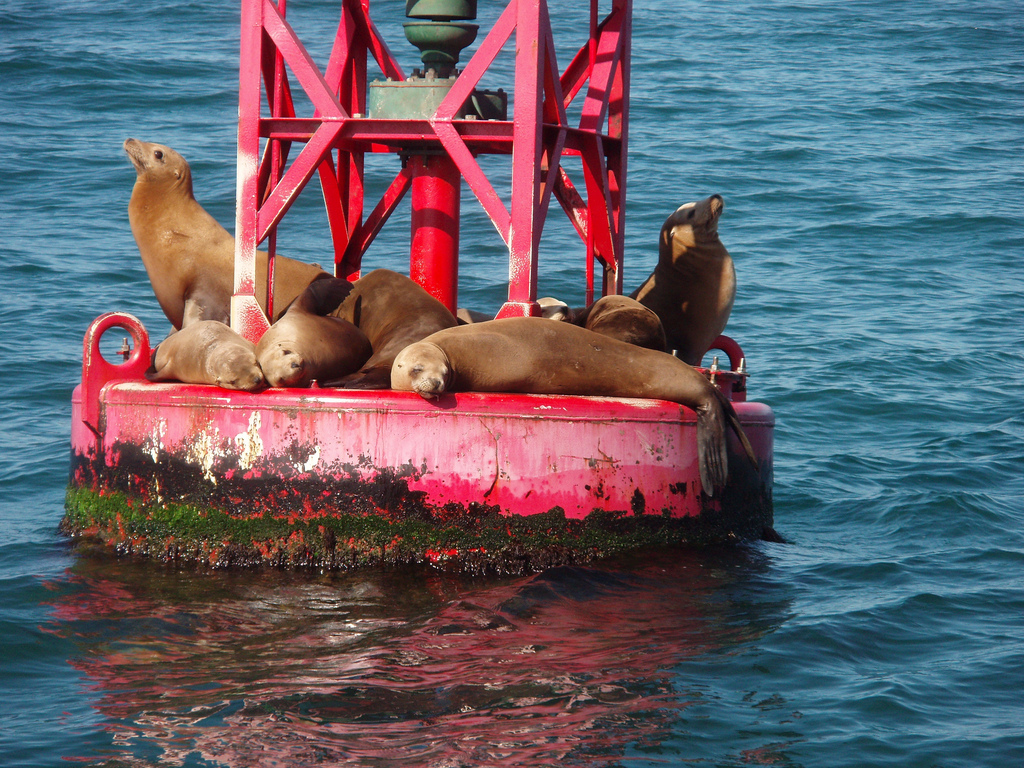
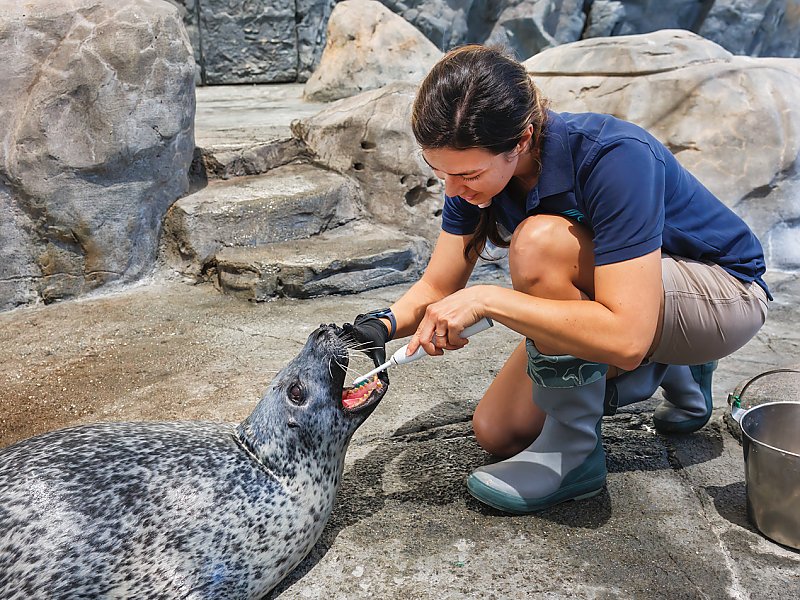
In some years, particularly the first few months of 2015, large numbers of sea lion pups are stranded along California’s coast and found starving and dehydrated. Sea lions give birth to their pups on the Channel Islands off the coast of California. Experts hypothesize that warmer waters off the coast are shifting the typical hunting grounds for sea lion prey, particularly sardines, meaning that new mothers must spend more time away from their pups foraging for food. Thus, the pups leave the islands earlier, when they are smaller and weaker.
According to experts with the National Oceanic and Atmospheric Administration (NOAA), an average year might see 160 sea lion strandings in the first quarter. As of March 2015, the California Stranding Network reported an intake of 2,250 stranded sea lions.
What to do if you find an injured marine mammal:
Pinnipeds like seals and sea lions are common sights around Southern California beaches, jetties, and harbors. It’s important to remember that these animals normally haul out of the water to rest and sun themselves, so not all seals or sea lions spotted on land require medical attention. However, if you spot an injured or stranded animal, there are professional and volunteer organizations that can respond.
Marine mammals, including sea otters, whales, dolphins, seals, and sea lions are all protected under the Marine Mammal Protection Act of 1972. It is a federal offense to disturb them, so do not approach or touch the animal. Do not try to coax it back into the water, do not pour water on the animal, and do not feed the animal.
Report sightings of stranded marine mammals by calling the California Stranding Network at 1-866-767-6114. Members of the network, which are authorized by NOAA, respond to stranding events along the entire U.S. West Coast. Please keep in mind that during times when there is an unusually high volume of stranded animals, organizations in the California Stranding Network may be at capacity and response times may be delayed.
You can also help by donating to members of the California Stranding Network. Find an organization near you by visiting the California Stranding Network website.