


Geographic Cone Snail
Conus geographus
The geographic cone snail is a tropical venomous snail that can be found in the Indo-Pacific and Australia. It uses a harpoon like tooth to hunt small fish.
Originally published: July 10, 2007
Last updated: February 06, 2026
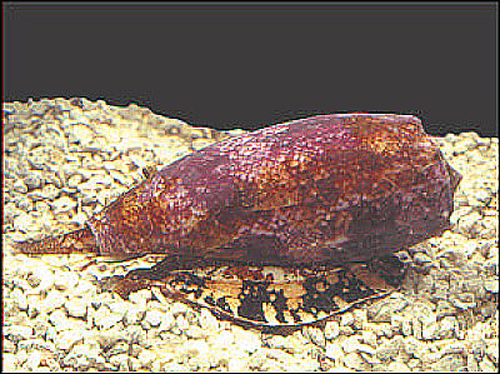
Credit: Courtesy NIGMS
SPECIES IN DETAIL
Geographic Cone Snail
Conus geographus
CONSERVATION STATUS: Least concern
Geographic Distribution
This snail can be found in tropical waters in the Indo-Pacific and Australia.
Habitat
Geographic cones live in sand pockets near reef edges, under dead coral rubble or among coral reefs.
Physical Characteristics
They have a rounded cone shaped shell that usually comes in shades of white, cream, pink or blue and a pattern of thin brown lines or blotches.
Size
The geographic cone snail is 7-15 cm (2.8-6 in) in length.
Diet
The geographic cone snail eats fish using a modified tooth as a harpoon. The snail injects the fish with venom and then engulfs and swallows them whole.
Reproduction
These snails lay eggs which are fertilized internally. The eggs are laid on hard surfaces and hatch into swimming larvae. The larvae then settle and grow into adult snails.
Special Notes
A medicine derived from the venom of the geographic cone snail is being studied as an alternative treatment for pain relief.
SPECIES IN DETAIL | Print full entry
Geographic Cone Snail
Conus geographus
CONSERVATION STATUS: Least concern
This snail can be found in tropical waters in the Indo-Pacific and Australia.
Geographic cones live in sand pockets near reef edges, under dead coral rubble or among coral reefs.
They have a rounded cone shaped shell that usually comes in shades of white, cream, pink or blue and a pattern of thin brown lines or blotches.
The geographic cone snail is 7-15 cm (2.8-6 in) in length.
The geographic cone snail eats fish using a modified tooth as a harpoon. The snail injects the fish with venom and then engulfs and swallows them whole.
These snails lay eggs which are fertilized internally. The eggs are laid on hard surfaces and hatch into swimming larvae. The larvae then settle and grow into adult snails.
A medicine derived from the venom of the geographic cone snail is being studied as an alternative treatment for pain relief.