


Ammonite
Subclass Ammonoidea
Ammonites are an extinct order of cephalopods. They are known for their tightly spiraled external shell and were found in the Jurassic and Paleocene time periods. They are the ancestors of modern day octopuses, squid and cuttlefish.
Originally published: July 10, 2007
Last updated: February 06, 2026
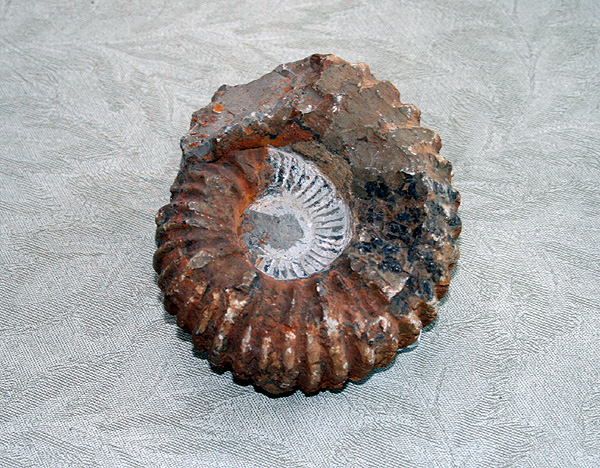
Credit: © L.Young, Aquarium of the Pacific
SPECIES IN DETAIL
Ammonite
Subclass Ammonoidea
CONSERVATION STATUS: Extinct in the wild
CLIMATE CHANGE: Not Applicable
Geographic Distribution
Ammonoid fossils are found around the world in a variety of marine sedimentary rocks that range in age from the Early Devonian (415 mya) to the Late Cretaceous (65 mya).
Habitat
These mollusks are believed to have lived in ocean depths from 50-250 m (164-820 ft).
Physical Characteristics
Ammonites are related to modern day octopus and squids but have an external shell. These shells are flat and spiraled. They have separated chambers inside their shell that are divided by thin walls with a thin tube-like structure passing through them. As the ammonite grew, it would add new, larger chambers to its shell, only occupying the newest one. They are thought to have used their tentacles and beak like mouth to help them eat.
Size
The size of these animals ranged from less than 2.5 cm (1 in) to 3 m (9 ft) in diameter.
Diet
Ammonites ate fish, crustaceans and trilobites. They are thought to have used their retractable tentacles to capture food and pass them to their beak-like mouth. Their radula, a tongue-like structure lined with tiny rough teeth, would further break up their food before being swallowed. Ammonites were believed to have been preyed upon by large reptiles and fish, including the mosasaur.
Reproduction
Little is known about the reproduction of this species.
Behavior
Like their modern day relatives, ammonoids swam by using jet-like propulsion. It is believed that by secreting gas and fluids into the hollow shell chambers through a small tube that passes through them. This helped them control their balance and movement in the water.
Adaptation
Ammonite make new chambers in their shell as they grow. They would only occupy the newest and largest chamber. It is believed ammonites had thinner and faster growing shells than their modern day relatives.
Longevity
It is estimated that they may have lived 4-36 years.
Special Notes
Ammonoids are commonly used as index fossils. These are fossils found globally in great quantity and within a relatively limited time span, both of which make them helpful in dating rocks in widely separated areas. Knowing when particular species of ammonoid lived helps date rarer fossils of unknown age when they are found in the same rock formation as ammonoids.
SPECIES IN DETAIL | Print full entry
Ammonite
Subclass Ammonoidea
CONSERVATION STATUS: Extinct in the wild
CLIMATE CHANGE: Not Applicable
Ammonoid fossils are found around the world in a variety of marine sedimentary rocks that range in age from the Early Devonian (415 mya) to the Late Cretaceous (65 mya).
These mollusks are believed to have lived in ocean depths from 50-250 m (164-820 ft).
Ammonites are related to modern day octopus and squids but have an external shell. These shells are flat and spiraled. They have separated chambers inside their shell that are divided by thin walls with a thin tube-like structure passing through them. As the ammonite grew, it would add new, larger chambers to its shell, only occupying the newest one. They are thought to have used their tentacles and beak like mouth to help them eat.
The size of these animals ranged from less than 2.5 cm (1 in) to 3 m (9 ft) in diameter.
Ammonites ate fish, crustaceans and trilobites. They are thought to have used their retractable tentacles to capture food and pass them to their beak-like mouth. Their radula, a tongue-like structure lined with tiny rough teeth, would further break up their food before being swallowed. Ammonites were believed to have been preyed upon by large reptiles and fish, including the mosasaur.
Little is known about the reproduction of this species.
Like their modern day relatives, ammonoids swam by using jet-like propulsion. It is believed that by secreting gas and fluids into the hollow shell chambers through a small tube that passes through them. This helped them control their balance and movement in the water.
Ammonite make new chambers in their shell as they grow. They would only occupy the newest and largest chamber. It is believed ammonites had thinner and faster growing shells than their modern day relatives.
It is estimated that they may have lived 4-36 years.
Ammonoids are commonly used as index fossils. These are fossils found globally in great quantity and within a relatively limited time span, both of which make them helpful in dating rocks in widely separated areas. Knowing when particular species of ammonoid lived helps date rarer fossils of unknown age when they are found in the same rock formation as ammonoids.