


Giant Spider Crab
Macrocheira kaempferi
The giant spider crab is the largest known species of crab and may live up to 100 years. The Japanese name for this species is ‘taka-ashi-gani’ literally translating to “tall legs crab.”
Originally published: July 08, 2024
Last updated: January 22, 2026
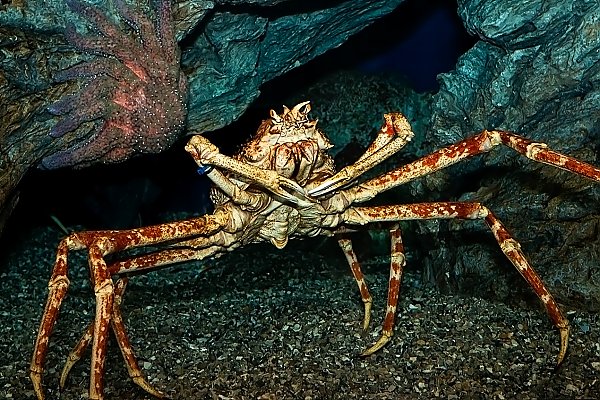
Credit: Aquarium of the Pacific/Robin Riggs
SPECIES IN DETAIL
Giant Spider Crab
Macrocheira kaempferi
CONSERVATION STATUS: Not evaluated
Geographic Distribution
They are found on the Pacific side of the Japanese islands (Konshu and Kyushu), usually at a latitude between 30 and 40 degrees north. They are found most often in the Sagami, Suruga, and Tosa bays, as well as off the coast of the Kii peninsula.
Habitat
They are found on the Pacific side of Japan off the islands of Honshu and Kyushu.
Physical Characteristics
Male and female spider crabs range from dark orange to tan and are known for having long spider-like legs. Females have smaller, wider abdomens than the males. Additionally, the female chelipeds (claw bearing legs) tend to be shorter than the males.
Size
Range mass: 16 to 20 kilograms (35.24 to 44.05 pounds) Range length: 3.7 meters (12.14 feet) Average length: 3 meters (9.84 feet)
Diet
Giant spider crabs are scavengers and omnivores (eating plants and animals). They eat small invertebrates like clams and mussels, algae, as well as dead fish and other leftovers.
Reproduction
These crabs mate in early Spring. The male delivers a packet of sperm to the female and eggs are fertilized internally. The eggs are carried by the female under their abdomen, hatching after about 10 days. The young crabs then go through several stages as they mature into adults.
Behavior
Spider crabs move slowly on their long legs and use their claws to pick up and tear their food.
Adaptation
Crabs don’t grow with their shells and must shed (molt) their old one and grow an new one as they age.
Longevity
Their longevity is unknown but these crabs are estimated to live 50-100 years.
Conservation
Conservation efforts focus on preventing overfishing of these crabs. It is illegal to catch them during mating season.
SPECIES IN DETAIL | Print full entry
Giant Spider Crab
Macrocheira kaempferi
CONSERVATION STATUS: Not evaluated
They are found on the Pacific side of the Japanese islands (Konshu and Kyushu), usually at a latitude between 30 and 40 degrees north. They are found most often in the Sagami, Suruga, and Tosa bays, as well as off the coast of the Kii peninsula.
They are found on the Pacific side of Japan off the islands of Honshu and Kyushu.
Male and female spider crabs range from dark orange to tan and are known for having long spider-like legs. Females have smaller, wider abdomens than the males. Additionally, the female chelipeds (claw bearing legs) tend to be shorter than the males.
Range mass: 16 to 20 kilograms (35.24 to 44.05 pounds) Range length: 3.7 meters (12.14 feet) Average length: 3 meters (9.84 feet)
Giant spider crabs are scavengers and omnivores (eating plants and animals). They eat small invertebrates like clams and mussels, algae, as well as dead fish and other leftovers.
These crabs mate in early Spring. The male delivers a packet of sperm to the female and eggs are fertilized internally. The eggs are carried by the female under their abdomen, hatching after about 10 days. The young crabs then go through several stages as they mature into adults.
Spider crabs move slowly on their long legs and use their claws to pick up and tear their food.
Crabs don’t grow with their shells and must shed (molt) their old one and grow an new one as they age.
Their longevity is unknown but these crabs are estimated to live 50-100 years.
Conservation efforts focus on preventing overfishing of these crabs. It is illegal to catch them during mating season.