


Cownose Ray
Rhinoptera bonasus
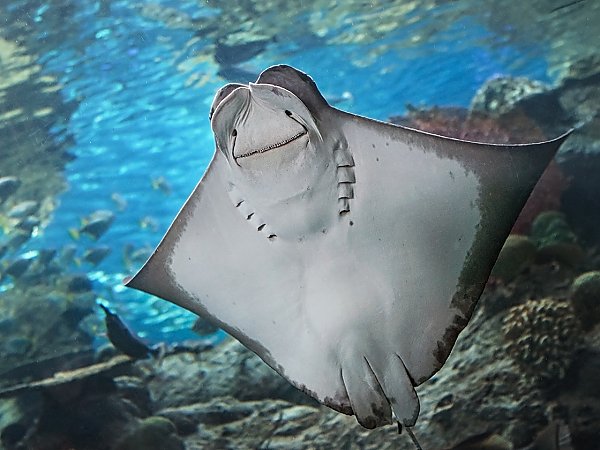
Similar in shape and in appearance to a kite, the cownose ray effortlessly rifles through shallow sandy and muddy habitats such as bays, estuaries, and salt marshes. Notably, the front of this creature’s head shares a distinct resemblance to a cow’s snout, hence the name cownose, and it has a long, whip-like tail. They travel in large schools of up to hundreds or thousands of rays called fevers.
Originally published: July 10, 2007
Last updated: May 15, 2026
Credit: Robin Riggs
SPECIES IN DETAIL
Cownose Ray
Rhinoptera bonasus
CONSERVATION STATUS: Vulnerable
Geographic Distribution
Gulf of Mexico, and the Eastern Atlantic Ocean from Argentina to New England
Habitat
Although this species is commonly found over soft mud or sand bottoms usually near coral or rock reefs, or near reef drop offs, these rays may also be found in the open ocean. They may also inhabit shallow seawater along coastlines and estuaries, intertidal marshes, and brackish lagoons. Depth range is generally in the upper 30 m (98.4 ft) of the water column, but deeper sightings have been reported.
Physical Characteristics
Cownose rays are somewhat diamond shaped and have the long, pointed pectoral fins typical of the Myliobatid or eagle rays. Disc width is approximately 1.7 to 1.8 times the ray’s length and the long, slender tail is about 1.4 times the length of the body. The head extends beyond the disc. Unlike any other ray, the rostrum is moderately notched. There is a small, rounded dorsal fin near the base of the whip-like tail. There are one or two stings on top of the tail directly behind the dorsal fin.
The upper surface may vary slightly in color but is mostly dark brown, frequently with a golden, bronze tint. The underside of cownose rays is white or whitish-yellow.
Size
The average width of a cownose ray is 64.8cm (25.5 inches) and the average length is 62.9 cm (24.7 inches).
Diet
Cownose rays are primarily bottom feeders. They prefer a varied diet of mollusks and crustaceans. When feeding, they cruise the bottom with a fluttering motion using senses of smell, touch, and electrosensory abilities to find food on or in the substrate. The pectoral fins are used to create suction to remove substrate over prey. Sediment is also removed by sucking it through the mouth and expelling it through the gill slits. Teeth in both jaws of these animals are arranged to form hard flat plates. Hard-shelled prey is crushed between the plates
Reproduction
Like many cartilaginous fishes, cownose rays mature very slowly and both males and females generally exceed half of their adult size before breeding. Fertilization is internal.
Reproduction in cownose rays is called aplacental viviparity with histotrophy. This is one of three forms of live birth in which no placenta is involved that were formerly called ovoviviparity. In its early developmental stage, the embryo receives its nutrition from the egg yolk. Then it breaks and sheds the thin membrane of the egg capsule and receives its nourishment from a fluid called histotroph or ‘uterine milk’ which is secreted from villi, appendages in the wall of the female’s uterus. These uterine extensions also provide the embryo with oxygen and remove its waste.
In mid-summer after a gestation period of 10-12 months, only one pup is born. The larger the female, the larger the pup. The pup emerges tail first with its pectoral fins wrapped around its body. Its spines are pliable and encased in sheaths, preventing injury to the female during birthing. The natal sheath is discarded and the spines harden soon after birth. The pups resemble miniature adults and are independent at birth. Mating occurs again shortly after the birthing process.
Behavior
These rays are known for making long migrations, starting in their summer nursery grounds of New England and heading south in the winter to the warmer waters of the Caribbean and Brazil.
Adaptation
Although this species is considered to be primarily a saltwater inhabitant, it can adjust to varying salinities such as those found in shallows of estuaries, wetlands, and other similar water areas where salinity varies on a regular basis, sometimes dramatically.
Conservation
The cownose ray is listed as vulnerable by the IUCN red list. While most regions don’t have a species specific conservation effort in place, these rays are susceptible to overfishing or bycatch. This, paired with a low reproduction rate (1 pup a year), leads to a slow recovery process. They were historically hunted in the United States through fishing competitions and were considered a nuisance to the shellfish industry. Further studies of this ray’s natural history are needed before a conservation strategy can be suggested.
Special Notes
Their scientific name comes from the Greek words for nose (rhinos) and wing or fin (pteron).
SPECIES IN DETAIL | Print full entry
Cownose Ray
Rhinoptera bonasus
CONSERVATION STATUS: Vulnerable
Gulf of Mexico, and the Eastern Atlantic Ocean from Argentina to New England
Although this species is commonly found over soft mud or sand bottoms usually near coral or rock reefs, or near reef drop offs, these rays may also be found in the open ocean. They may also inhabit shallow seawater along coastlines and estuaries, intertidal marshes, and brackish lagoons. Depth range is generally in the upper 30 m (98.4 ft) of the water column, but deeper sightings have been reported.
Cownose rays are somewhat diamond shaped and have the long, pointed pectoral fins typical of the Myliobatid or eagle rays. Disc width is approximately 1.7 to 1.8 times the ray’s length and the long, slender tail is about 1.4 times the length of the body. The head extends beyond the disc. Unlike any other ray, the rostrum is moderately notched. There is a small, rounded dorsal fin near the base of the whip-like tail. There are one or two stings on top of the tail directly behind the dorsal fin.
The upper surface may vary slightly in color but is mostly dark brown, frequently with a golden, bronze tint. The underside of cownose rays is white or whitish-yellow.
The average width of a cownose ray is 64.8cm (25.5 inches) and the average length is 62.9 cm (24.7 inches).
Cownose rays are primarily bottom feeders. They prefer a varied diet of mollusks and crustaceans. When feeding, they cruise the bottom with a fluttering motion using senses of smell, touch, and electrosensory abilities to find food on or in the substrate. The pectoral fins are used to create suction to remove substrate over prey. Sediment is also removed by sucking it through the mouth and expelling it through the gill slits. Teeth in both jaws of these animals are arranged to form hard flat plates. Hard-shelled prey is crushed between the plates
Like many cartilaginous fishes, cownose rays mature very slowly and both males and females generally exceed half of their adult size before breeding. Fertilization is internal.
Reproduction in cownose rays is called aplacental viviparity with histotrophy. This is one of three forms of live birth in which no placenta is involved that were formerly called ovoviviparity. In its early developmental stage, the embryo receives its nutrition from the egg yolk. Then it breaks and sheds the thin membrane of the egg capsule and receives its nourishment from a fluid called histotroph or ‘uterine milk’ which is secreted from villi, appendages in the wall of the female’s uterus. These uterine extensions also provide the embryo with oxygen and remove its waste.
In mid-summer after a gestation period of 10-12 months, only one pup is born. The larger the female, the larger the pup. The pup emerges tail first with its pectoral fins wrapped around its body. Its spines are pliable and encased in sheaths, preventing injury to the female during birthing. The natal sheath is discarded and the spines harden soon after birth. The pups resemble miniature adults and are independent at birth. Mating occurs again shortly after the birthing process.
These rays are known for making long migrations, starting in their summer nursery grounds of New England and heading south in the winter to the warmer waters of the Caribbean and Brazil.
Although this species is considered to be primarily a saltwater inhabitant, it can adjust to varying salinities such as those found in shallows of estuaries, wetlands, and other similar water areas where salinity varies on a regular basis, sometimes dramatically.
The cownose ray is listed as vulnerable by the IUCN red list. While most regions don’t have a species specific conservation effort in place, these rays are susceptible to overfishing or bycatch. This, paired with a low reproduction rate (1 pup a year), leads to a slow recovery process. They were historically hunted in the United States through fishing competitions and were considered a nuisance to the shellfish industry. Further studies of this ray’s natural history are needed before a conservation strategy can be suggested.
Their scientific name comes from the Greek words for nose (rhinos) and wing or fin (pteron).