Sheep Crab
Loxorhynchus grandis

Sheep Crab
Loxorhynchus grandis
Sheep crab populations are rebuilding under management measures.
Morphology
Sheep crabs, a type of spider crab, is the largest crab found on the California coast. They have a tear-shaped, oval carapace approximately 17 centimeters long in males and 11 centimeters in females. The texture of the carapace is bumpy and spiny, and it has 1 pair of claws and 4 pairs of legs that are long and segmented with joints. Legs and claws are also bigger in males than in females. Crabs are typically reddish or brown in color. Algae growing on their bodies over time can give them a fuzzy appearance which is the source of their common name.
Their total span, including their legs, can reach up to 1 meter and their weight is recorded up to 4 kilograms.
Habitat and Range
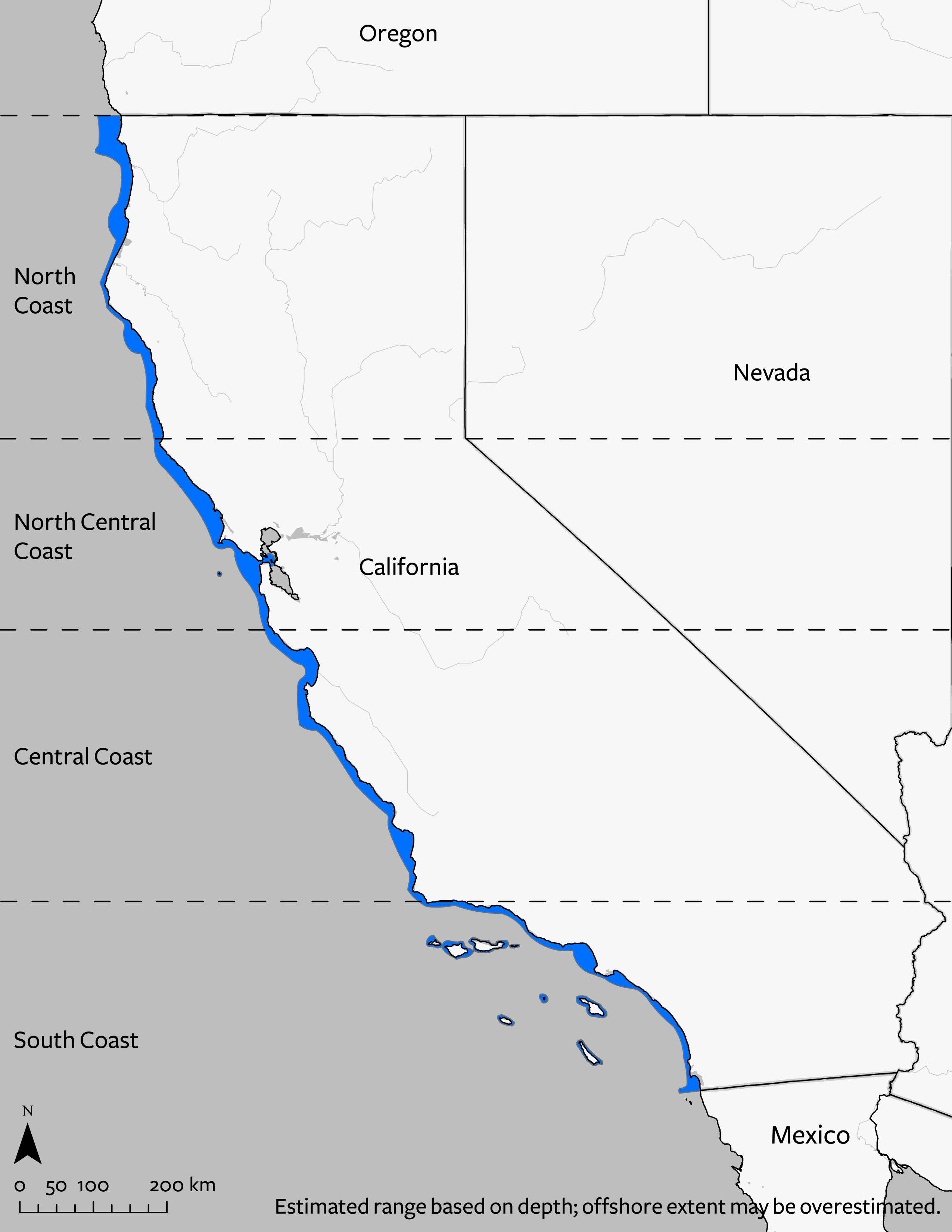
Sheep crabs are found in rocky reefs up to 152 meters deep from Cordell Bank to Baja California Mexico. They also are attracted to man-made structures like pilings.
Range Map
Reproductive Biology and Life History
Lifespan is not well studied but estimated at 4 years.
Sheep crabs molt frequently as they rapidly grow in the juvenile period. This slows as they reach adulthood with females molting generally once in this spring (February – June) as they prepare for mating; whereas males molt in late summer after mating. Sheep crab eventually stop molting, which means they cannot regenerate body parts or grow after this ‘terminal molt’.
Sheep crabs are found in shallower waters during mating season in spring and summer, and move to deeper waters in the fall and winter. Mating can occur in large aggregations, with piles of stacked crabs up to five or more deep. Females brood 125,000 to 500,000 eggs on their abdomen for an undocumented period of time. Females have been documented to retain sperm packets to fertilize future broods when males are not present.
While mating peaks in the spring and summer, females have been found with eggs at all times of the year.
Ecology
Sheep crabs are slow moving bottom dwelling scavengers that eat many things, both living and dead. This can include mussels, sea stars, shrimp, crabs, worms, algae and dead fish. Because they consume dead things, a feeding mode called detritivores, they help recycle nutrients and maintain ecosystem balance.
Due to their large size, adult sheep crabs have few natural predators, primarily sea otters. Juveniles are predated by a wider range of animals including adult sheep crab, cabezon, sheephead, octopus, sharks and rays. Juveniles will camouflage themselves by decorating their carapace (shell) with materials such as algae, barnacles, and sponges, which has been suggested to confuse predators.
Cultural Significance and Historical Context
In the 1980s, sheep crabs were caught commercially by gillnets. After gillnets were banned in shallow water, the fishery was no longer economically profitable and at present there is no commercial fishery for sheep crab. There is not much meat on sheep crab and the flesh is not considered high quality.
Sheep crabs can be bycatch in other commercial fisheries such as the California spiny lobster fishery. Starting in January 2019, California Department of Fish and Wildlife maintains an annual total allowable catch by weight as bycatch under the California Spiny Lobster Fisheries Management Plan.
Date modified: April 2026
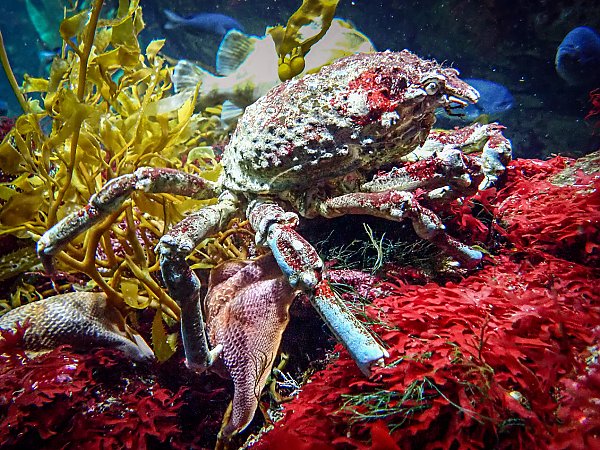
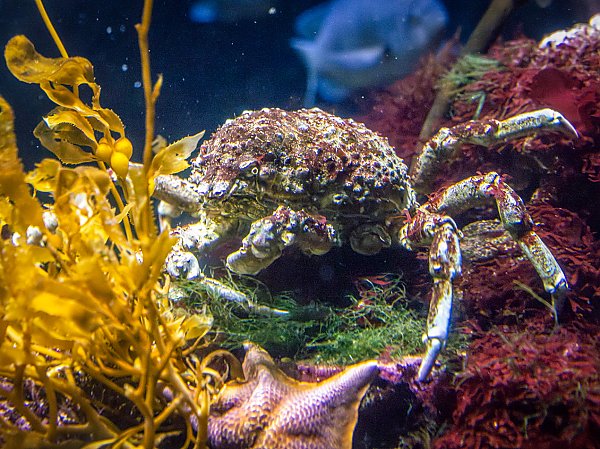
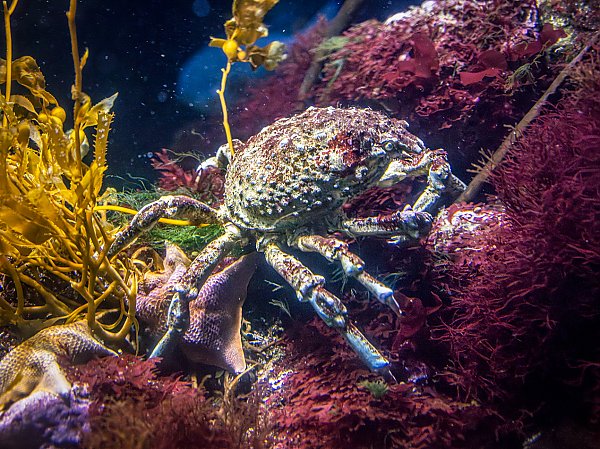
This animal can be found at the Aquarium of the Pacific
Primary ThreatsPrimary Threats Conditions
Threats and Conservation Status
Current pressing threats to sheep crabs are limited now that the commercial fishery has ceased and an annual total allowable catch limit is in place to regulate bycatch. Recreational fishing for sheep crabs is allowed year-round with a sport fishing license, using a hoop net or being caught by hand (diving/snorkeling). Hook and line catching is prohibited. There is no catch limit per angler, and annual recreational catch is not documented.
There is not much published literature specific to threats sheep crabs face, including on the effects of warming and acidification.
The data from the state monitoring program over the last 25 years shows the population is stable with fluctuations. It is important to note that very few transects had any observed animals, so mean density is well below 1. Density observations within marine protected areas are higher than reference sites, suggesting the benefit of spatial protection to the species.
Documenting the number of aggregations is an alternative way of estimating relative abundance, and reporting these when observed could be the basis for additional monitoring.
Population Plots
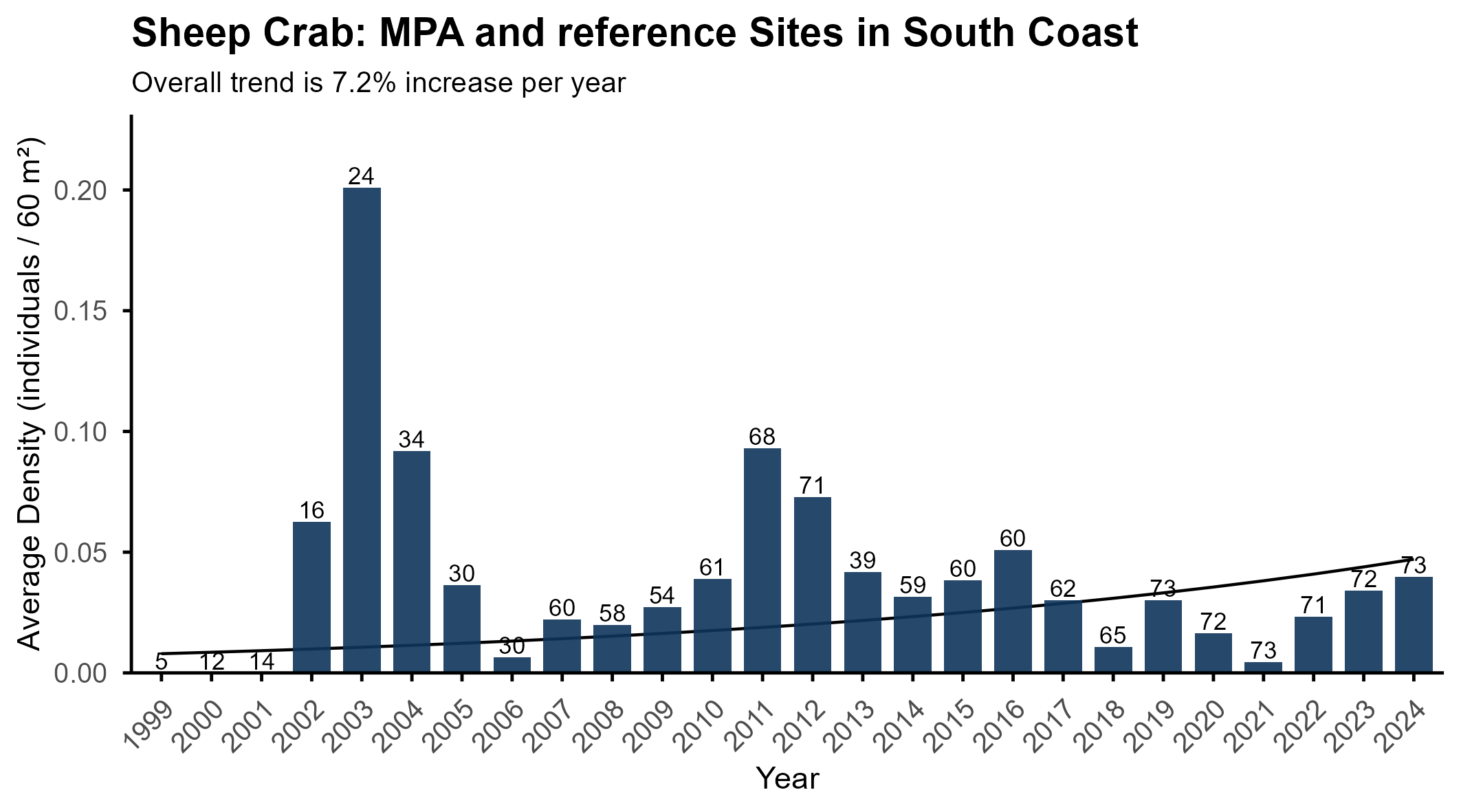
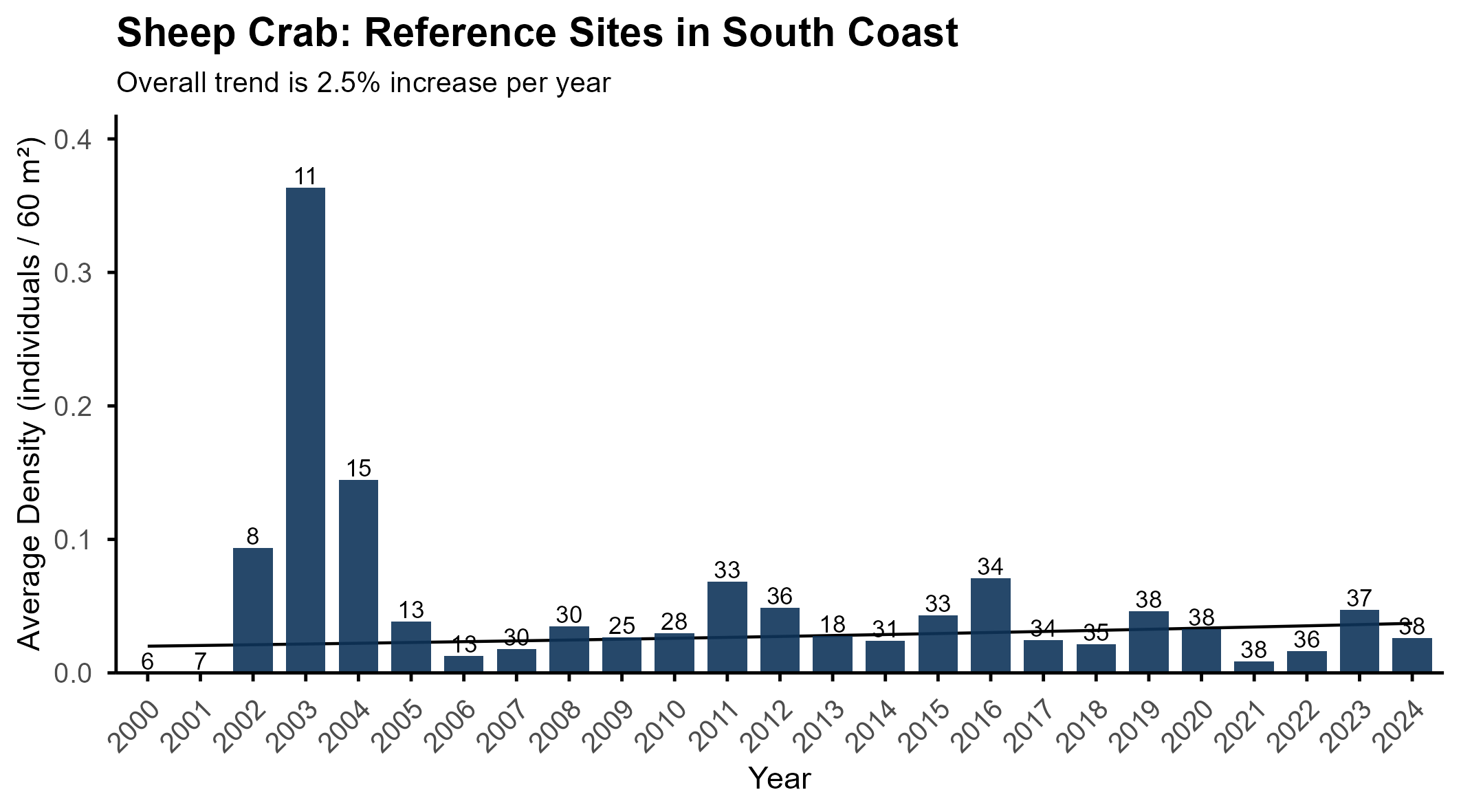
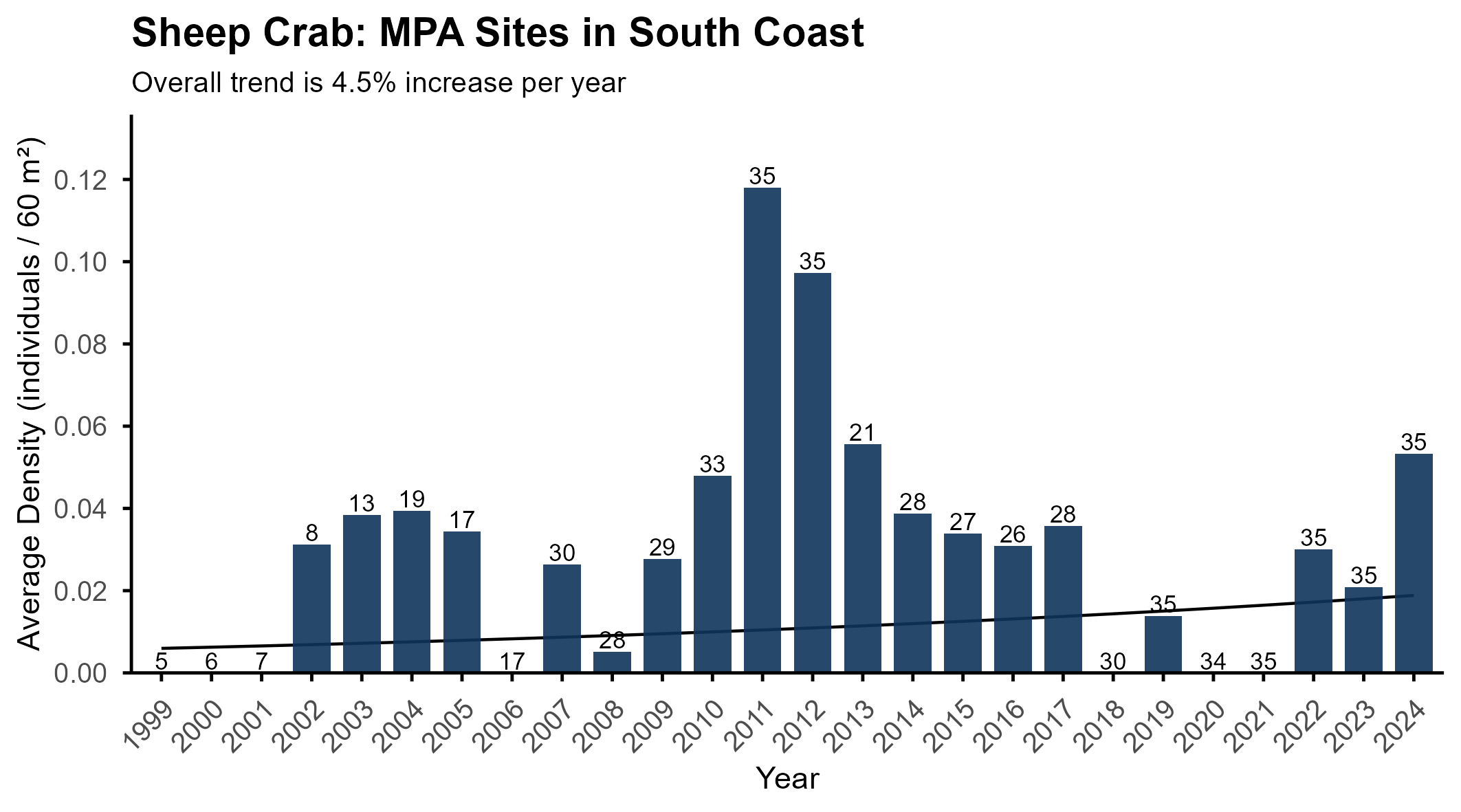
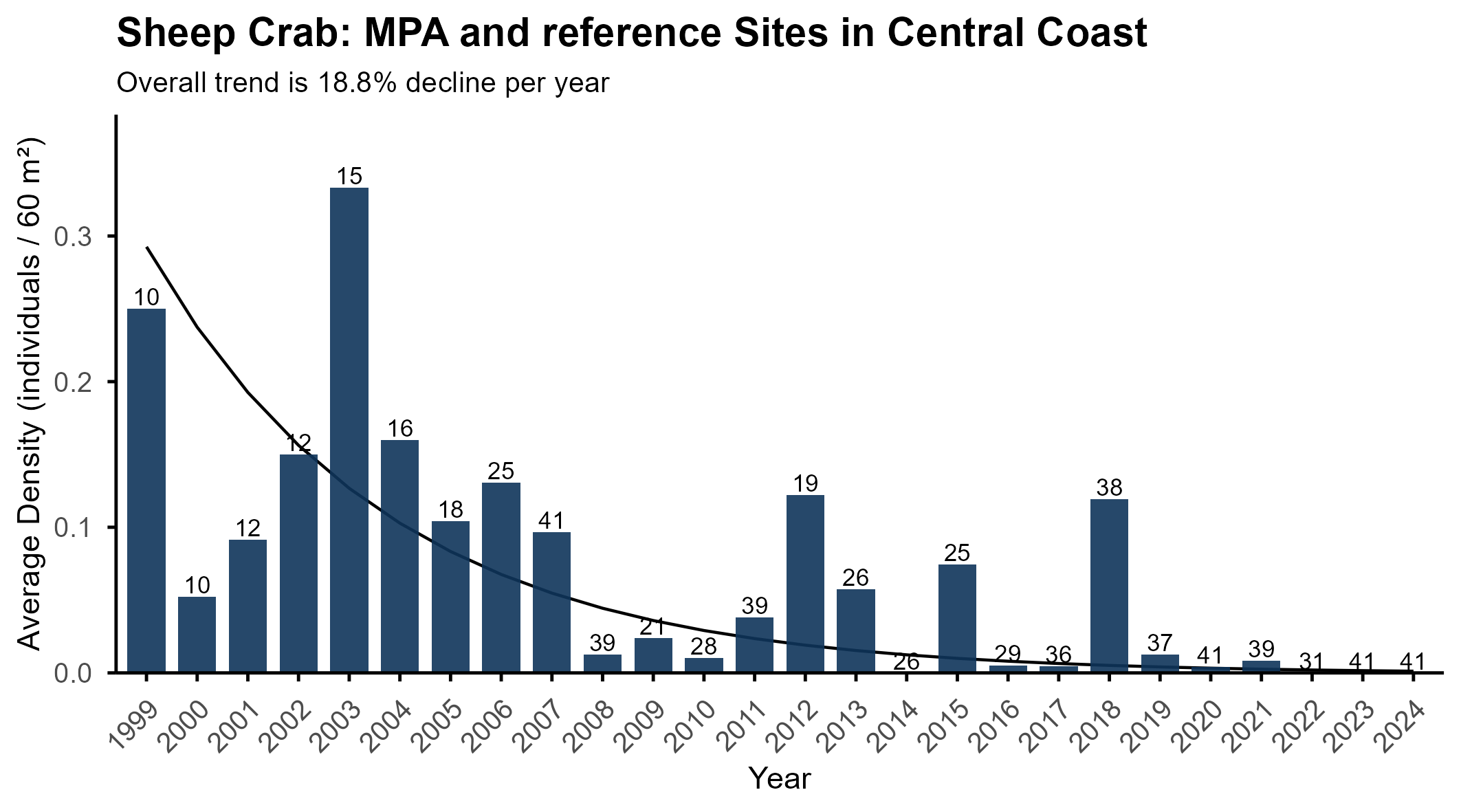
Data Source: Monitoring and Evaluation of Kelp Forest Ecosystems in the MLPA Marine Protected Area Network. California Ocean Protection Council Data Repository.
- California Department of Fish and Wildlife. (2016). California Spiny Lobster Fishery Management Plan. https://www.wildlife.ca.gov/Conservation/Marine/Lobster-FMP.
- California Department of Fish and Wildlife. (2024). Sheep crab. Marine Species Portal. https://marinespecies.wildlife.ca.gov/sheep-crab/false/
- California Department of Fish and Wildlife. (2026). California Recreational Ocean Fishing Regulations. https://wildlife.ca.gov/Fishing/Ocean/Regulations/Sport-Fishing/Invertebrate-Fishing-Regs#crustaceans
- Culver, C. S. and Kuris, A. M. (2001). Sheep crab. California’s Living Marine Resources: A Status Report. (115-117). California Department of Fish and Game.
- Gadgey, K. & Bahekar, A. (2017). Investigation of mechanical properties of crab shell: a review. International Journal of Latest Trends in Engineering and Technology 8(1), 268-281 DOI: http://dx.doi.org/10.21172/1.81.036
- Hobday, A. J. and Rumsey, S. M. (1999). Population dynamics of the sheep crab Loxorhynchus grandis (Majidae) Stimpson 1857 at La Jolla California. UC San Diego Scripps Institution of Oceanography Technical Report. https://escholarship.org/uc/item/35c9t718
- Patyten, M. (2019). 2019 Recreational and Commercial Fishing Regulations. California Department of Fish and Wildlife. https://cdfwmarine.wordpress.com/2019/04/09/2019-recreational-and-commercial-fishing-regulations-available-for-download/#:~:text=Other%20changes%20in%20the%20commercial,allowable%20catch%20of%2095%2C000%20pounds
- Sea Grant California. (n.d.) Sheep Crab. https://caseagrant.ucsd.edu/seafood-profiles/sheep-crab#