Cabezon
Scorpaenichthys marmoratus

Cabezon
Scorpaenichthys marmoratus
Cabezon have a small home range so benefit from spatial management.
Morphology
Cabezon are large fish, reaching up to 1 meter and weighing up to 13.6 kilograms, though more typically are 7.7 kilograms. Its name comes from its large head (cabeza– Spanish for “head”). The fish are mottled, or blotchy, shades of brown, grey, red and green allowing them to camouflage on rocks. Their bellies are greenish or white.
Cabezon have similarities in their appearance to lingcod (Ophiodon elongatus). Both are part of the sculpin family (Cottidae). Key differences include the coloring (scorpionfish tend to be redder) and lack of scales in cabezon.
Habitat and Range
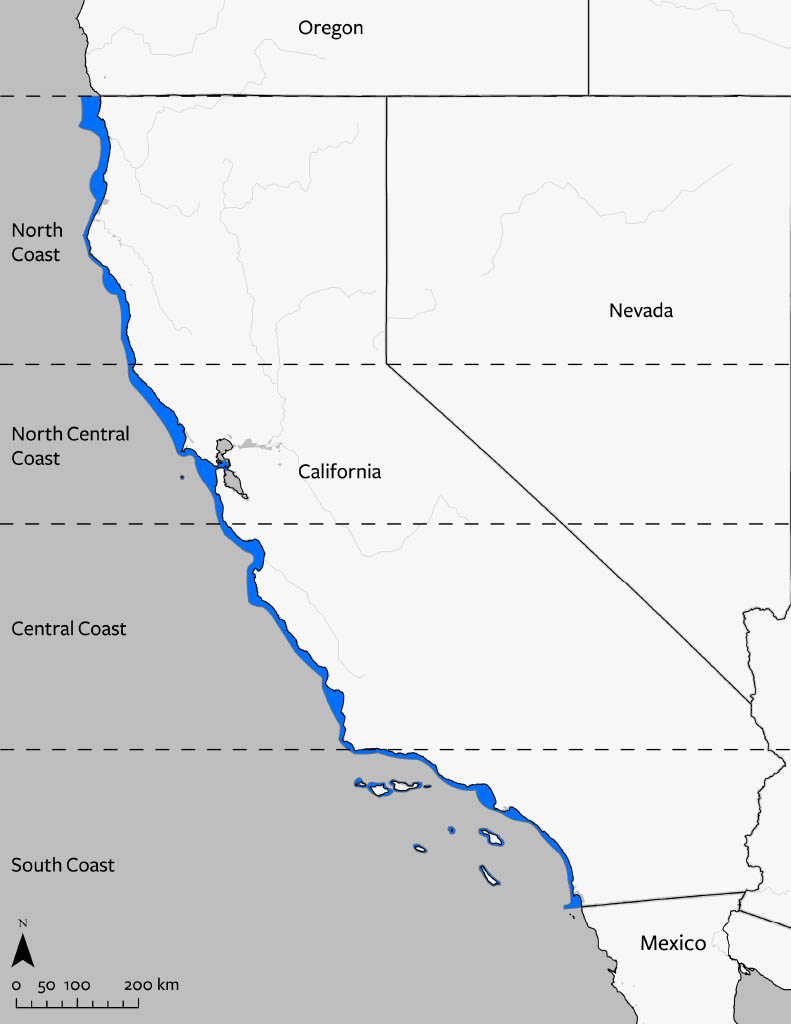
Cabezon are found from Alaska to Baja California. They typically prefer nearshore areas with rocky bottoms including kelp forests, tidepools, and jetties. They can be found from the intertidal zone to a depth of 231 meters.
Range Map
Reproductive Biology and Life History
Cabezon can spawn in the winter and summer but typically in California the season ranges from October to March with January as the peak. Females deposit 45,000-120,000 eggs on rocky surfaces and males fertilize them and guard them until hatching.
Hatchlings travel out to sea for 3-4 months before returning to the intertidal zone as fish 3-5 centimeters in length. Males reach sexual maturity at 2-3 years and females at 3-5 years of age.
Cabezon are long lived, reaching up to at least 17 years of age in some accounts, but most typically live up to 14 years.
Ecology
Cabezon spend a lot of their time sitting on rocky surfaces, not swimming. They are voracious, undiscerning eaters consuming most things that can fit in their mouths as they lunge from their stationary location. Prey items include crabs, small fish, abalone, squid, octopus, and small lobsters. Cabezon predators include finfish, seabirds and marine mammals.
As adults they have a relatively small home range, returning to within 100 meters of a site in mark-recapture studies. This could indicate the benefit of spatial management approaches for their conservation into the future. Moreover, a study has also shown that cabezon size increases within a marine protected area relative to those in adjacent unprotected areas.
Cultural Significance and Historical Context
Archeology records suggest that cabezon were harvested in California as early as 6200 BC. They are a popular game fish today and often can be landed alive, which is appealing to the restaurant industry. The flesh of the fish is sweet, but its eggs (roe) are poisonous to humans.
Date modified: April 2026
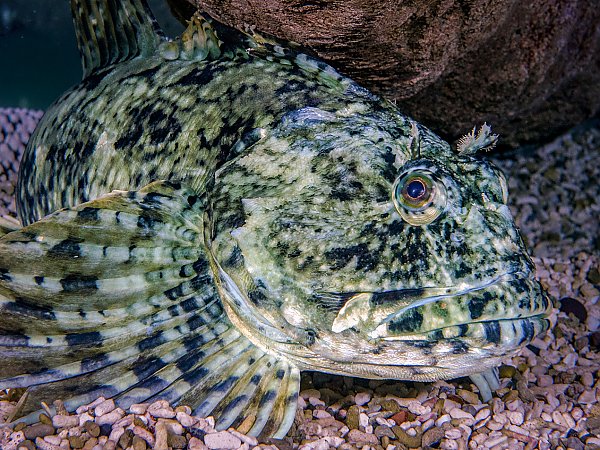
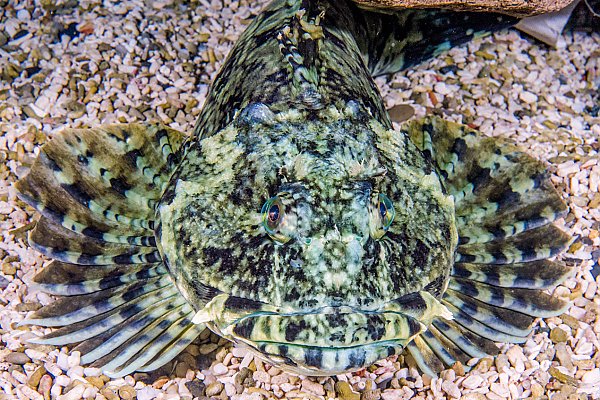
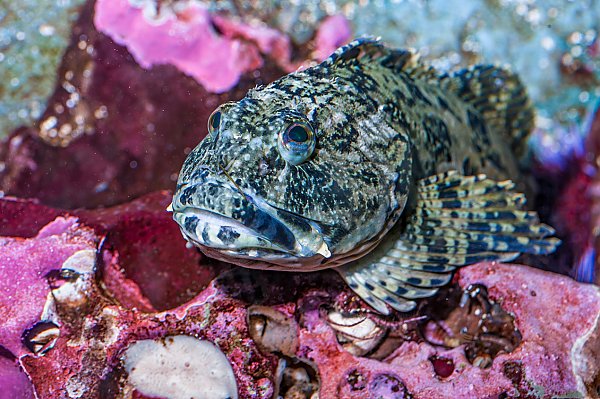
This animal can be found at the Aquarium of the Pacific
Primary ThreatsPrimary Threats Conditions
Threats and Conservation Status
Fishing is the primary threat for cabezon. Fishing intensity increased from 1960s to mid 1990s, and since then has been regulated. Overexploitation is not currently a concern as a result of its wide distribution, management restrictions in place, and lack of widespread consumer demand.
Cabezon is a managed fishery with other groundfish. At the federal level more than 90 fish species are managed as part of the Groundfish Fisheries Management Plan, and in California cabezon is managed along with another 18 species as part of the California Nearshore Fisheries Management Plan. Management techniques for commercial fishery include trip limits by weight, minimum size thresholds, and statewide total allowable catch. For recreational fishers there is a 10 fish bag limit, and in previous time, a minimum length requirement was in place.
Using data from the MLPA monitoring program, the cabezon population trend is stable with fluctuations. Average observations are very low, so a slope of the trendline is not displayed. Data reveal higher density within marine protected area sites than reference sites (see south coast plots for comparison). Data from the North and North Central coasts did not meet the 10-year continuous time series articulated in the Report Card methods, so they have not been included in this account. However, observations in this region should be factored into an overall state trend, since catch is an order of magnitude higher in those regions as shown by the 2019 U.S. west coast stock assessment. It is important to note that the categorization of ‘stable with fluctuations’ with the Report Card methods differs from that of federal managers which have modelled the population at above the fishery target and increasing in biomass from California to Oregon.
Warming oceans under climate change are anticipated to impact reproduction and habitat use. One study in Oregon and Washington demonstrated that larval growth and recruitment increased under warmer waters during a marine heat wave as the juveniles were consuming larger prey that were available as a result of the heat wave. This could signal climate change as a benefit to cabezon, though bears further study.
Population Plots
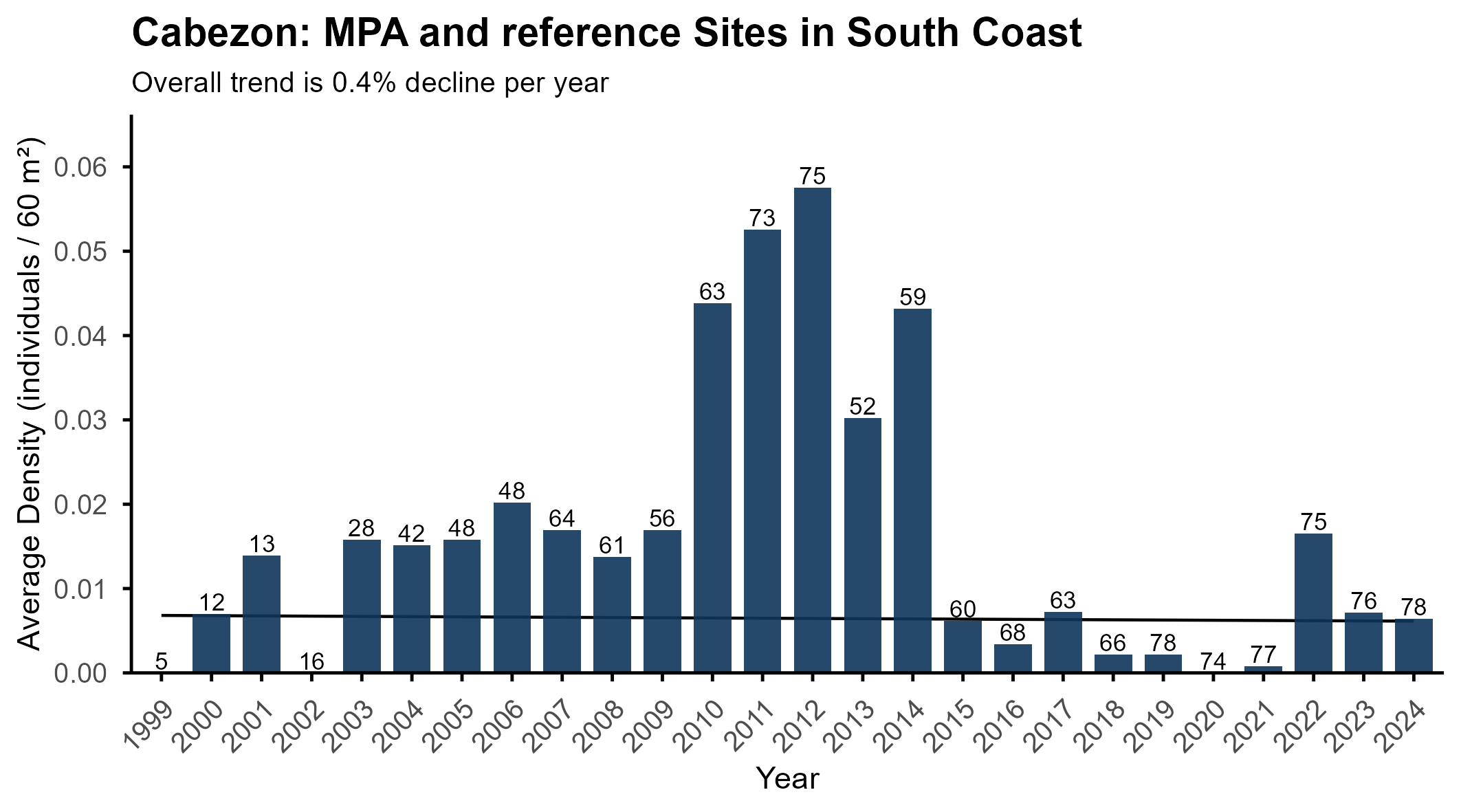
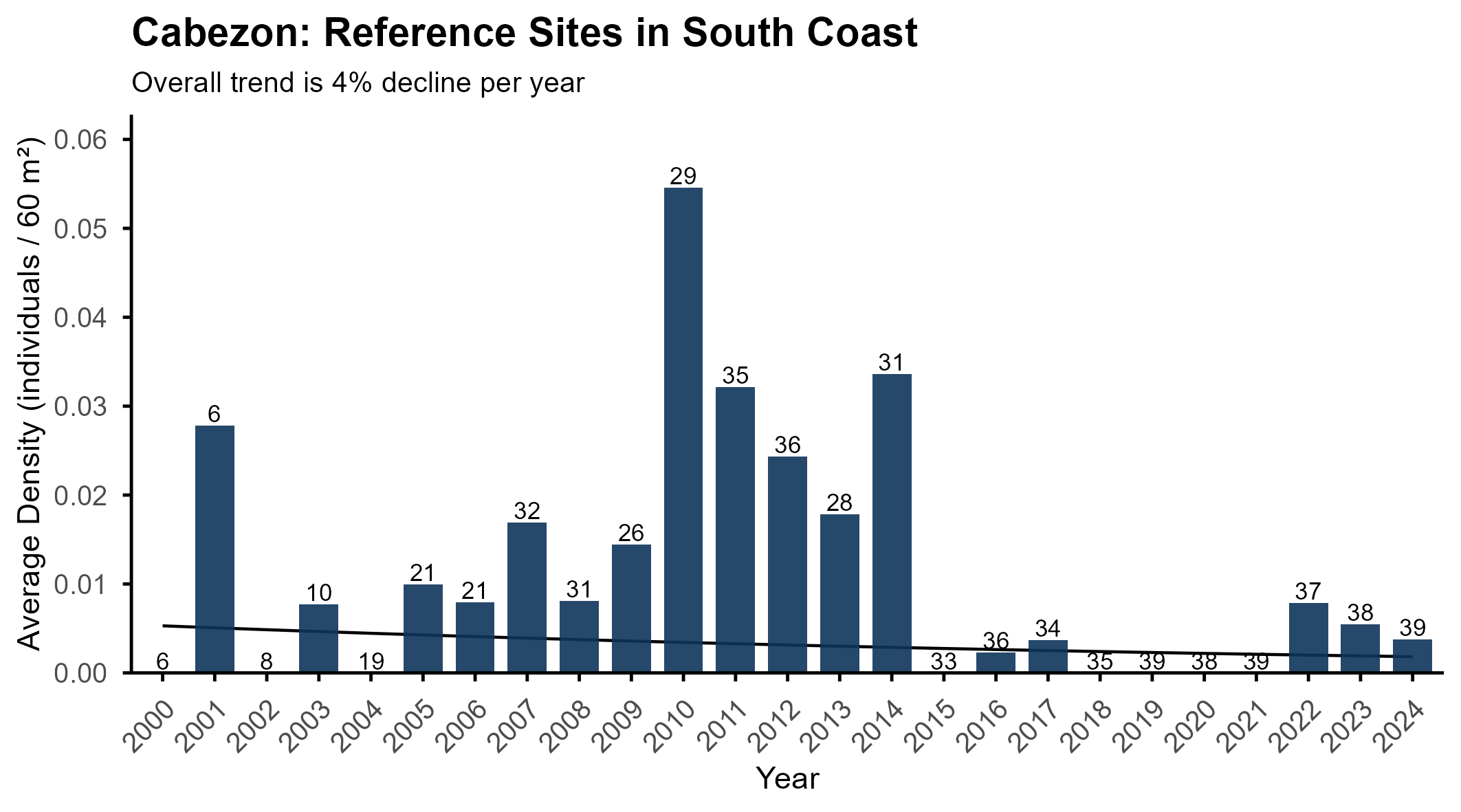
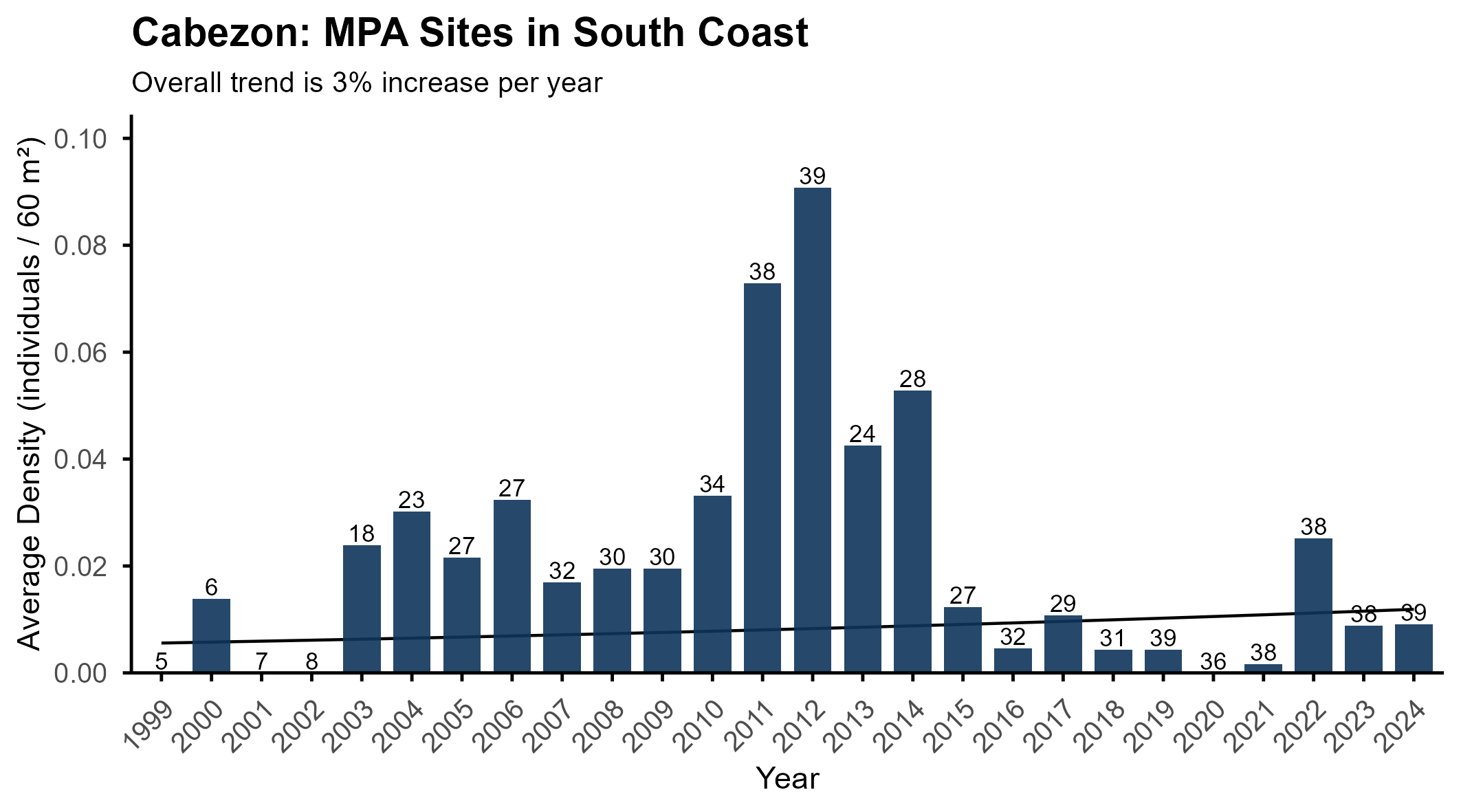
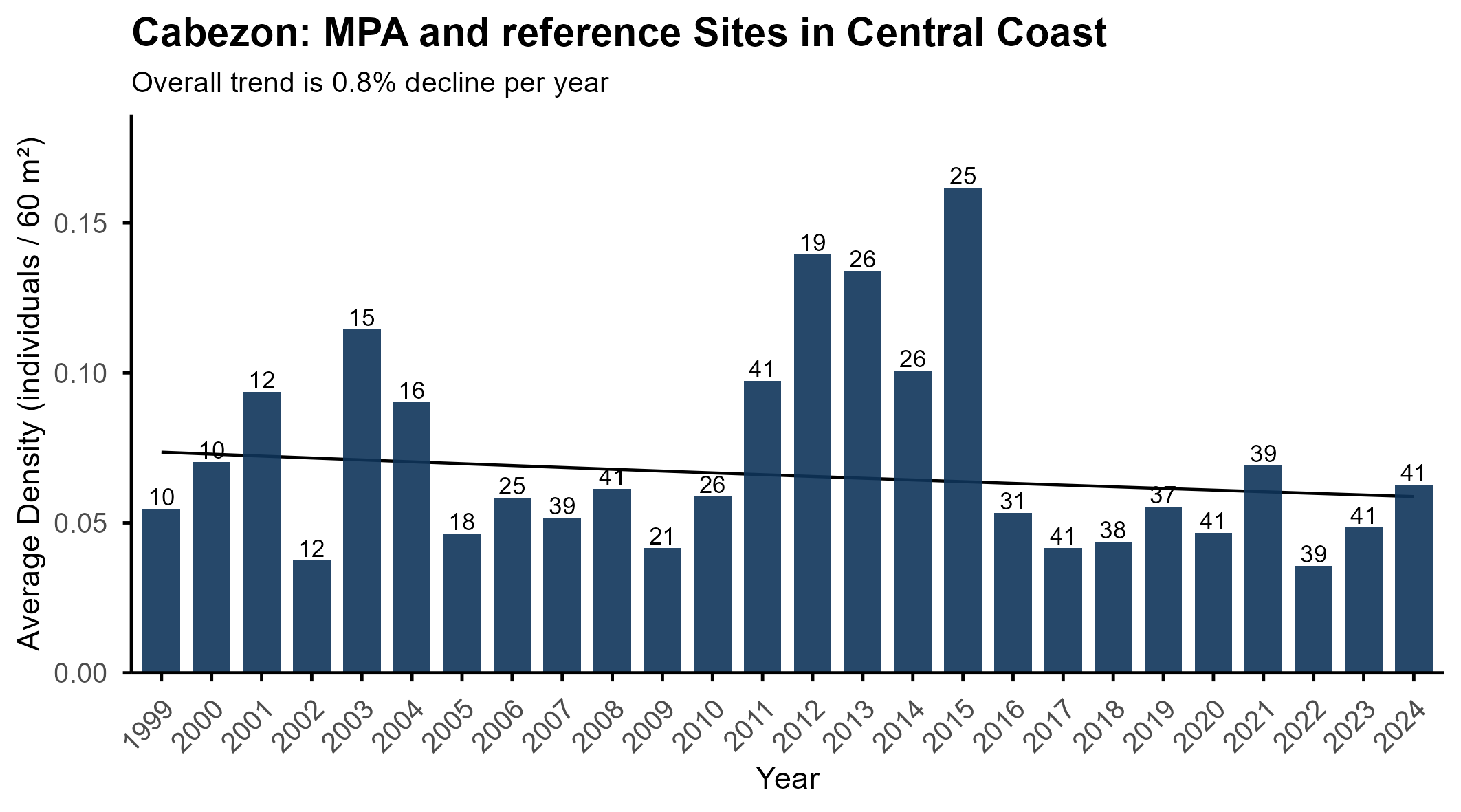
Data Source: Monitoring and Evaluation of Kelp Forest Ecosystems in the MLPA Marine Protected Area Network. California Ocean Protection Council Data Repository.
- California Department of Fish and Wildlife. (2021). Cabezon. Marine Species Portal. https://marinespecies.wildlife.ca.gov/cabezon/
- California Department of Fish and Wildlife. (2026). 2026 California commercial fishing regulations digest. https://nrm.dfg.ca.gov/FileHandler.ashx?DocumentID=191712&inline
- Central Coast Regional Water Quality Control Board. (n.d). Cabezon (Scorpaenichithys marmoratus). California State Water Resources Control Board. https://www.waterboards.ca.gov/rwqcb3/water_issues/programs/duke_energy/docs/sampling/cabezon.pdf
- Coffey, W., Nardone, J., Yarram, A., Long, W.C., Swiney, K. Foy, R., Dickinson, G.H. (2017). Ocean acidification leads to altered micromechanical properties of the mineralized cuticle in juvenile red and blue king crabs, Journal of Experimental Marine Biology and Ecology, 495,1-12. https://doi.org/10.1016/j.jembe.2017.05.011
- Cope, J. M. Key,. (2009). Status of Cabezon in California and Oregon Waters as Assessed in 2009. California Department of fish and Came c/o National Marine Fisheries Service. Fishery Resource Analysis and Monitoring Division Northwest Fisheries Science Center. Web. https://stacks.stanford.edu/file/druid:wp142gt6325/Cabezon09_FINAL.pdf
- Cope, J.M., Berger, A.M., Whitman, A.D., Budrick, J.E., Bosley, K.M., Tsou, T., Niles, C.B., Privitera-Johnson, K., Hillier, L.K., Hinton, K.E., and Wilson, M.N. (2019). Assessing Cabezon (Scorpaenichthys marmoratus) stocks in waters off of California and Oregon, with catch limit estimation for Washignton State. Pacific Fishery Management Council, Portland, OR. Available from http://www.pcouncil.org/groundfish/stock-assessments/
- Davis BE, Komoroske LM, Hansen MJ, Poletto JB, Perry EN, Miller NA, Ehlman SM, Wheeler SG, Sih A, Todgham AE, Fangue NA (2018) Juvenile rockfish show resilience to CO2-acidification and hypoxia across multiple biological scales. Conservation Physiology 6(1). doi:10.1093/ conphys/coy038.
- O'Connell C.W., Clark R., Villano J.H., Gugelmann H., Dyer J.E. (2014). Acute human toxicity after the ingestion of cabezon, Scorpaenichthys marmoratus, roe. Clinical Toxicology 52(7),820. doi: 10.3109/15563650.2014.933232. PMID: 25089726. https://pubmed.ncbi.nlm.nih.gov/25089726/
- Sea Grant California. (n.d.). Cabezon. https://caseagrant.ucsd.edu/seafood-profiles/cabezon
- Wilson, M.N., Brodeur R.D., Auth T.D., Roegner G.C., Morgan C.A., Zeman S.M. and Sponaugle S. (2025). A tale of two heatwaves: variable daily growth and a broad diet enable neustonic larval cabezon to thrive during warm oceanic conditions. Frontiers in Marine Science, 12, Article 1569581. doi: 10.3389/fmars.2025.1569581